


1. Reusable Packaging: An Inevitable Trend in Packaging Evolution
In June 2024, the European Union released the Ecodesign for Sustainable Products Regulation (ESPR). With this regulation at its core, reusability and low-carbon footprint have become mandatory compliance requirements for market access, vigorously driving the construction of packaging recovery systems.
The global packaging industry is accelerating its transition from a single-use model toward reusable and smart paradigms. Internal logistics within manufacturing enterprises and their upstream/downstream supply chains are the first to adopt reusable packaging. Simultaneously, high-value goods are piloting smart reusable packaging integrated with shock sensors, GPS positioning, and cellular Real-Time Communication (RTC) capabilities.
However, labeling solutions for reusable packaging still face critical bottlenecks:
· Traditional Paper Labels: It cannot be rewritten. The required removal and cleaning during recovery can damage the container surfaces and escalate operational costs.
· Standard Electronic Tags: Most struggle to balance low power consumption, outdoor environmental stability, and functional scalability. Furthermore, the long cost-amortization cycles and lack of unified adaptation standards have constrained the large-scale implementation of reusable packaging.
2. ePaper Shipping Label Solutions
2.1 What is ePaper?
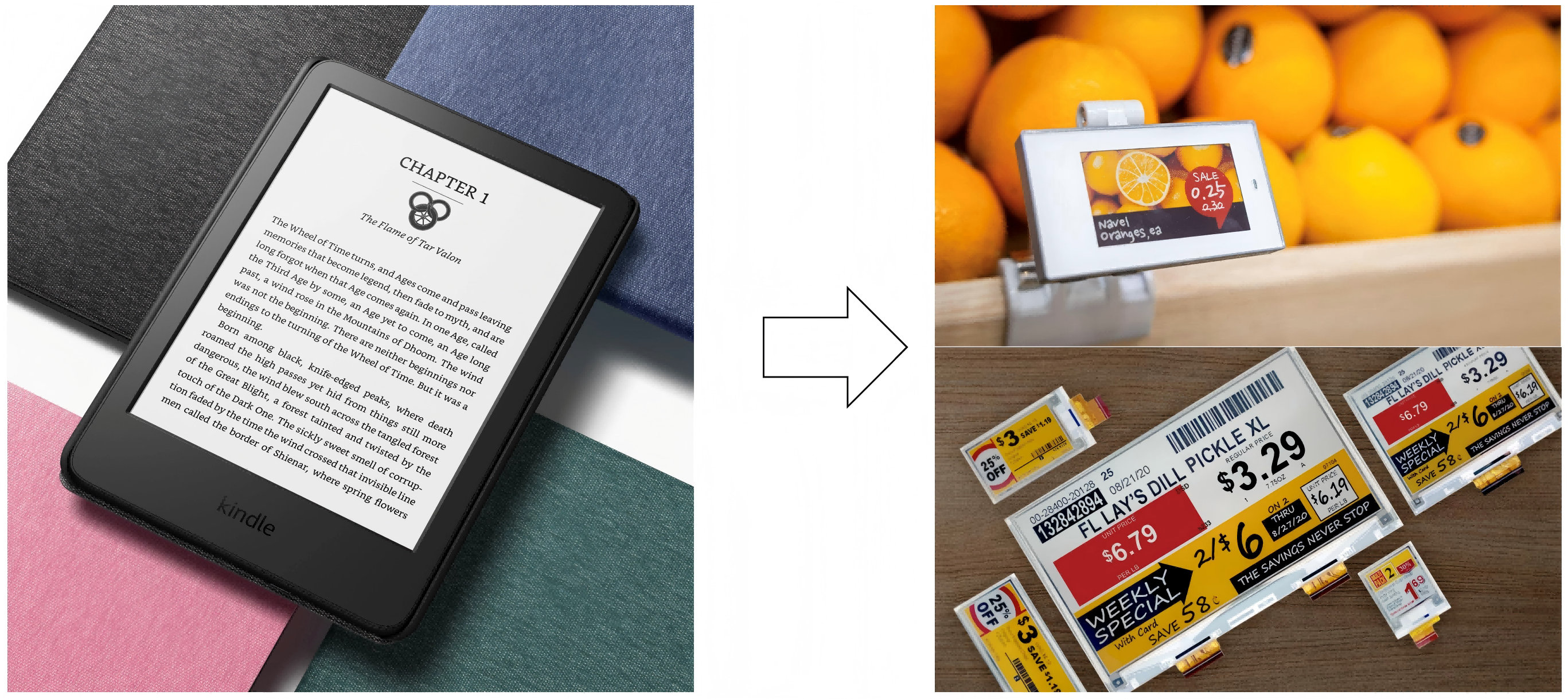
ePaper is a fully reflective display technology that relies on ambient light for image formation. Requiring no backlight, it delivers a visual experience highly consistent with traditional paper. Characterized by its bistability and ultra-low power consumption, it consumes energy only during screen refreshes and maintains zero power in a static state. This makes it the ideal display medium for reusable packaging as a digital label. ePaper offers high contrast, an ultra-wide viewing angle approaching 180°, and operates across a wide temperature range from -15°C to 65°C, remaining legible even under direct sunlight. As a rewritable solution, it completely replaces disposable paper labels, promoting a green and low-carbon environment. Following years of evolution, ePaper has expanded from eReaders into various form factors such as Electronic Shelf Labels (ESL), digital table signs, door signage, and smart badges.
2.2 Three Types of ePaper Shipping Labels
Based on cost, power, and functional requirements, ePaper shipping labels are categorized into three types: Passive, Active, and Smart, building a full-scenario product matrix.
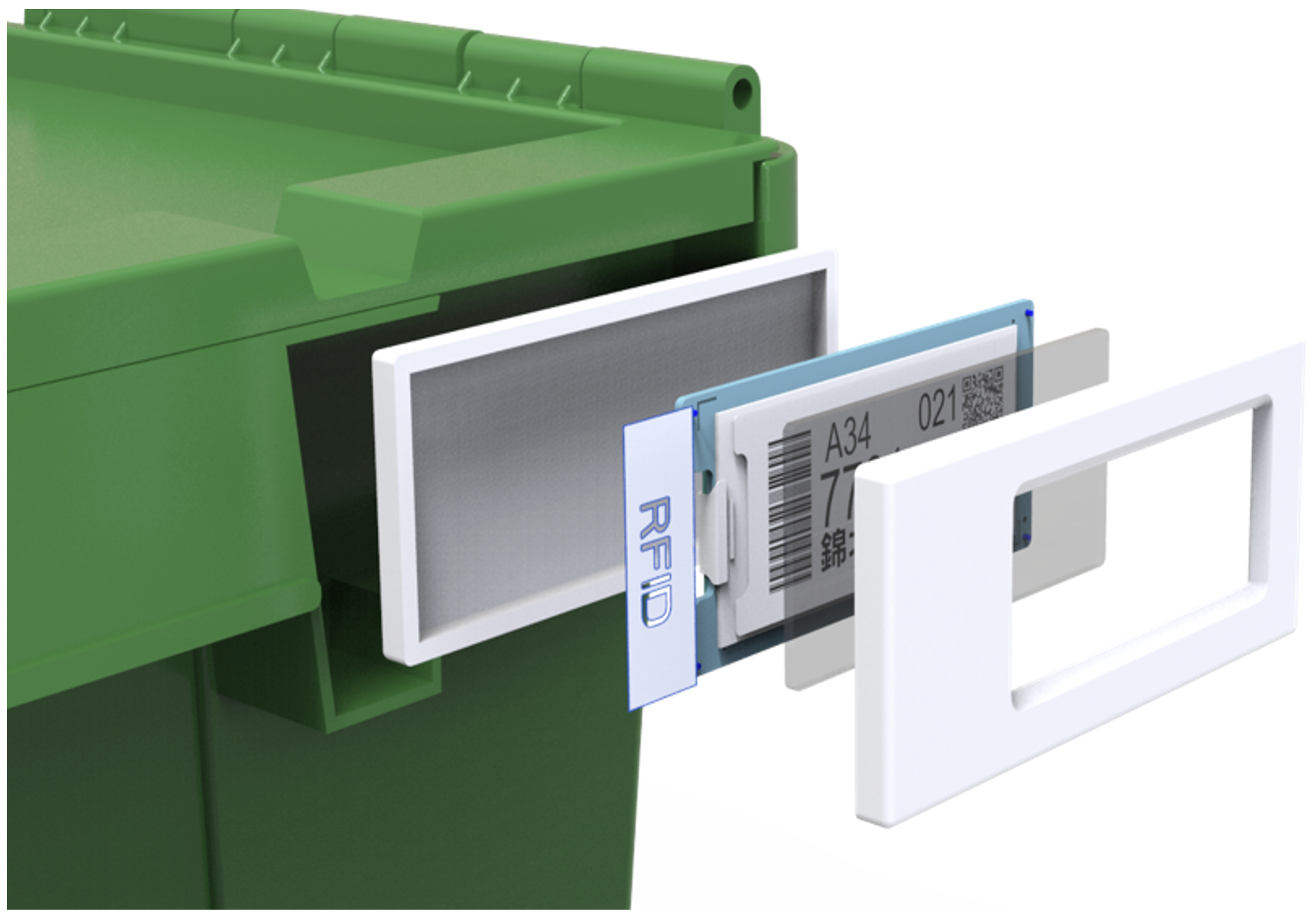
· Passive Type (NFC + ePaper, optional integrated lock): Relying on NFC energy harvesting, data is updated via handheld readers or smartphones. This maintenance-free, low-cost option is suited for Trust Delivery scenarios like luxury goods and high-value gifts. No internal battery is required for the ePaper shipping label, suitable for factory internal circulation boxes, express logistics turnover cages, etc.
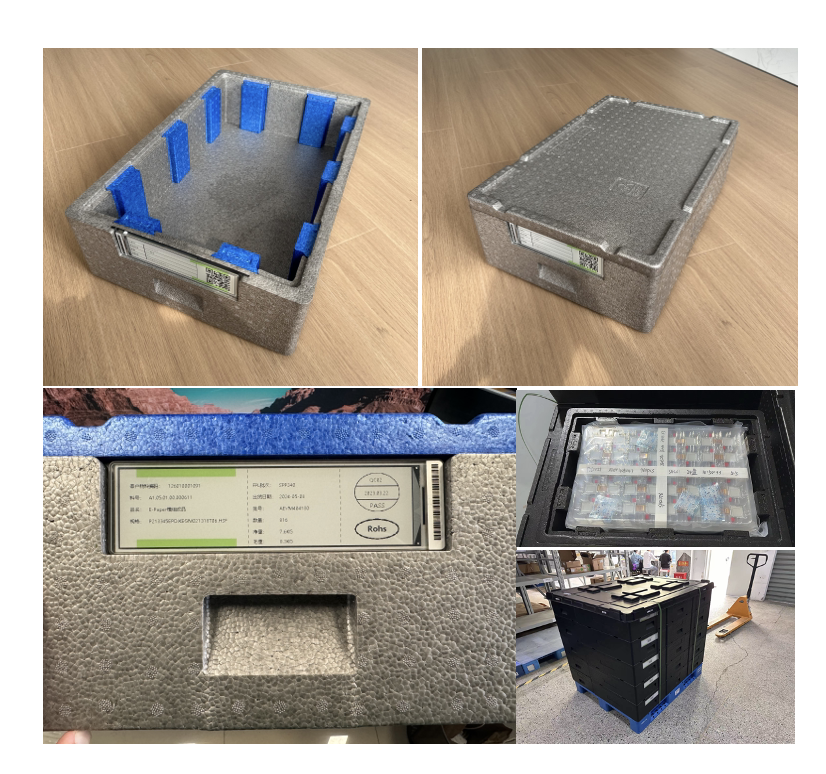
· Active Type (ePaper + BLE, optional sensors / lock): Equipped with a long-life button cell battery and optional sensors/locks, it supports wireless updates and data collection for temperature, humidity, and shock. It balances cost and functionality, suitable for user cased such as Cold Chain Logistics, trusted delivery and in-factory picking, etc.
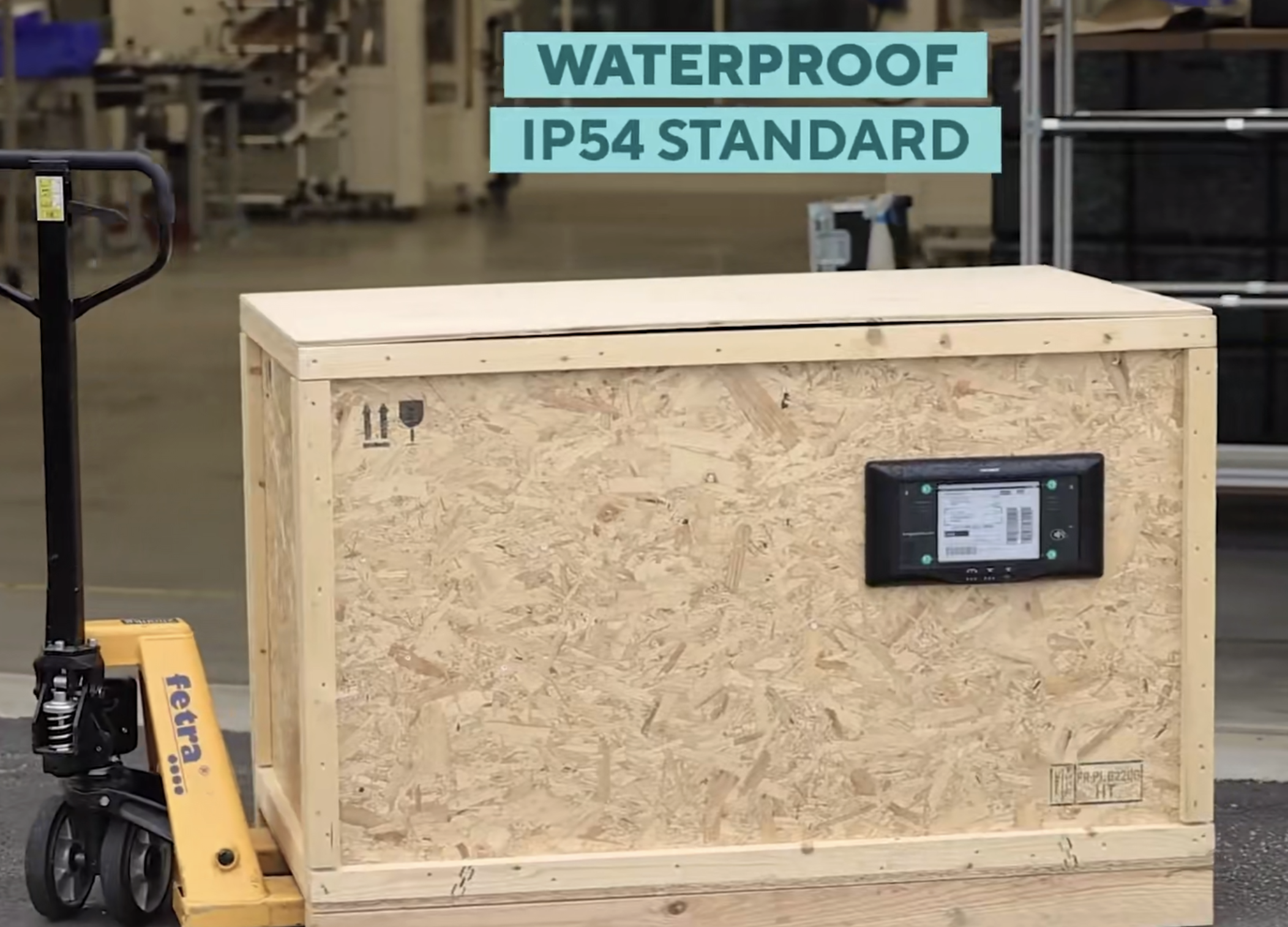
· Smart Type (ePaper + Wide Area IoT /4G LTE Cat.1 + Location tracking + Multiple sensors): Featuring remote real-time refreshing and global tracking, it automatically uploads data when sensor thresholds are triggered. This is designed for high-end scenarios requiring full-process supervision such as high-value goods, fragile instruments and equipment, cold chain medicines and vaccines, etc.
2.3 The Value of ePaper Shipping Labels
The integration of ePaper labels and reusable packaging achieves a triple leap in environmental protection, cost and efficiency.
· Environmental Value: A single ePaper label can replace thousands of paper labels and eliminate box cleaning, significantly reducing paper consumption and carbon emissions, helping enterprises comply with green regulations like the EU ESPR.
· Cost Value: While the initial investment is higher, costs are significantly reduced across the Circular Life Cycle by eliminating consumables and labor. Integrated location tracking and sensing functions also mitigate cargo damage and asset loss, shortening the Return on Investment (ROI) cycle.
· Digital Value: Wireless, real-time updates perfectly match the high-frequency turnover of reusable packaging. Full-process Data Traceability resolves industry pain points like misrouting or tampering, upgrading reusable packaging from "physical reuse" to "Smart Asset Management", building a brand-new digital logistics ecosystem.

3. User Case Example: LivingPackets
European smart packaging pioneer LivingPackets has set a benchmark for ePaper reusable packaging with its THE BOX series.
Its core product, THE BOX, is made of environmentally friendly EPP material with 98% air filling. It is designed for up to 1000 reuses and is fully recyclable after disposal. It requires no cushioning materials or sealing tape, achieving zero waste from the source. The box is equipped with an ePaper shipping label compatible with global logistics sorting systems. The ePaper shipping label information can be updated in real time without modifying existing processes, completely eliminating disposable paper waybills.
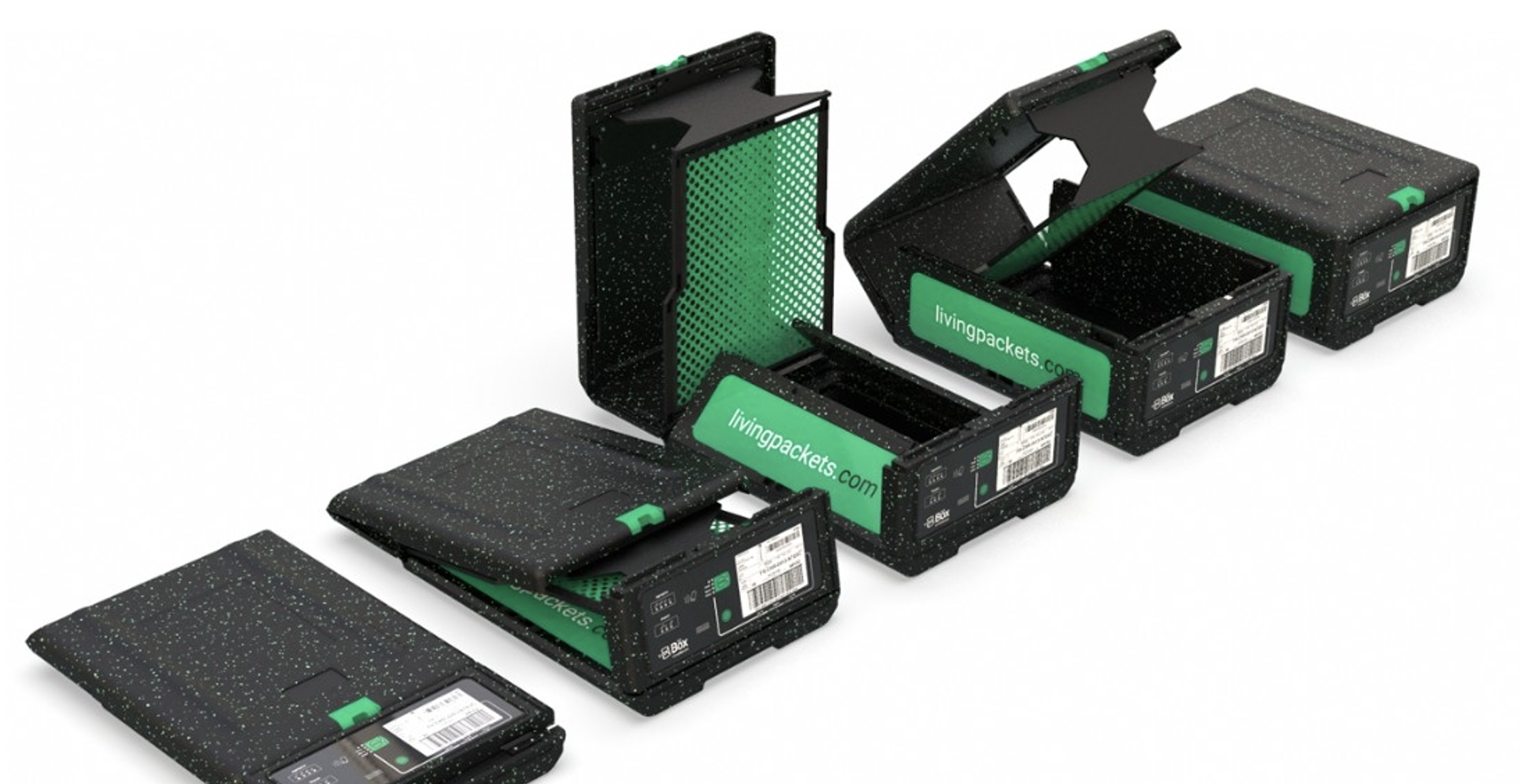
This system integrates GPS positioning, temperature, humidity, and vibration sensors, and electronic locks. Through a cloud platform, it achieves near real-time tracking, geofencing, and anomaly alarms, providing end-to-end security for high-value goods.
For different scenarios, LivingPackets offers the foldable THE BOX (suitable for B2C e-commerce) and the waterproof and heat-insulating THE BOX Pro (suitable for B2B industrial logistics). Its innovative "pay-per-use" and asset-sharing business model significantly lowers the barrier for customers, fully validating the commercial viability and significant environmental value of ePaper shipping lables in the field of recyclable packaging.
ePaper labels effectively address the core pain points of reusable packaging. Moving forward, driven by technological evolution and expanding user cases, these solutions will further enhance cost-efficiency and functional integration, fostering an intelligent and eco-friendly logistics infrastructure.